

AMHS Overhead Rail System Decommission and Installation for a Semiconductor Fab
Categories
Introduction
When a semiconductor fabrication facility upgrades its Automated Material Handling System, the work on the ground is seldom straightforward. The existing overhead rail infrastructure must be dismantled without disrupting the production environment below. The new system must be installed to the AMHS supplier’s specifications. And all of this takes place inside a live cleanroom where the consequences of contamination or structural interference are immediate and expensive
When a leading AMHS supplier was appointed to supply a new overhead rail system for a leading semiconductor manufacturer, B H S was commissioned to manage the full scope — decommissioning the existing system and installing the new AMHS system. This case study describes how that work was planned and executed, and why the AMHS supplier’s choice of installation partner is as important as the system itself.

The Customer’s Challenge
An overhead rail AMHS is not a peripheral system. It is the infrastructure that moves wafers between tools across the fab — the transport network that keeps production running.
- The existing system has to come down without damaging what is below it. An overhead rail system sits above active production tools and cleanroom infrastructure. Dismantling it requires controlled sequencing — rail sections, carriers, stockers, and support structures removed in the right order, without dropping debris into the cleanroom, without creating vibration that affects adjacent tools.
- The new system must be installed to the AMHS supplier's specifications. The overhead rail system is a precision installation — rail alignment, levelling, carrier clearances, and load port connections: all must meet the supplier's technical requirements before the system can be commissioned and handed over.
- The cleanroom environment cannot be compromised throughout. Both the decommissioning and installation takes place inside a live cleanroom. Cleanroom protocols apply from the first day of dismantling to the last day of installation
- The AMHS supplier needs a partner, not just a crew. The AMHS supplier's engineers know the system. They need an installation partner who understands the cleanroom environment, can work to their specifications without constant supervision, and can manage the sequencing of a complex installation across a live fab independently.
The B H S Solution
Decommissioning the Existing Overhead Rail System
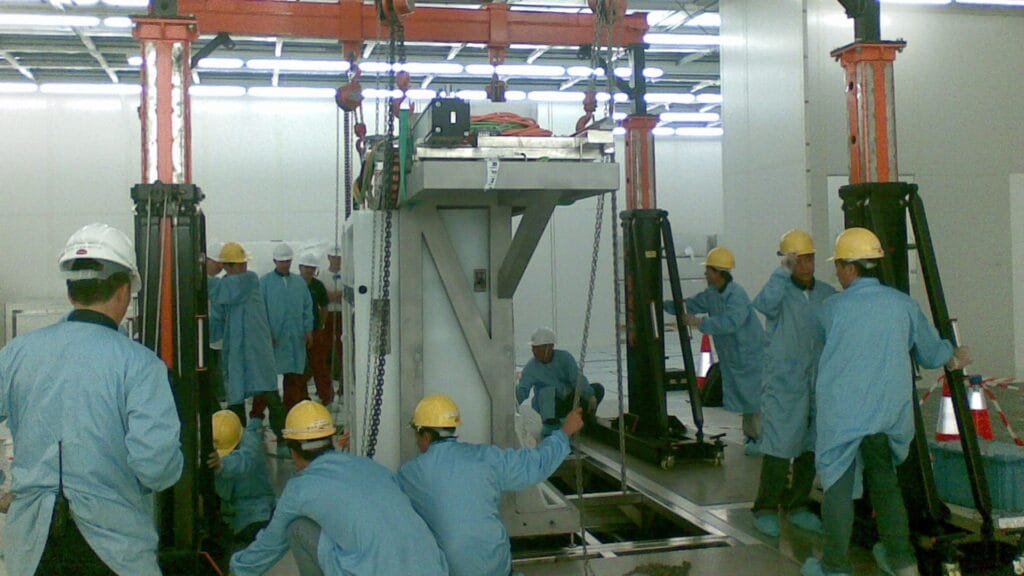
B H S planned the dismantling sequence before any work began. The existing overhead rail system was mapped against the fab layout and the production schedule. The dismantling sequence was designed to minimise the operational footprint of the work at each stage.
Cleanroom protocols were applied throughout. Materials were handled, packaged, and removed from the cleanroom in a way that prevented contamination. Each section of the existing system was dismantled in the planned sequence, confirmed clear, and prepared for the new installation.
Installation of the New Overhead Rail System
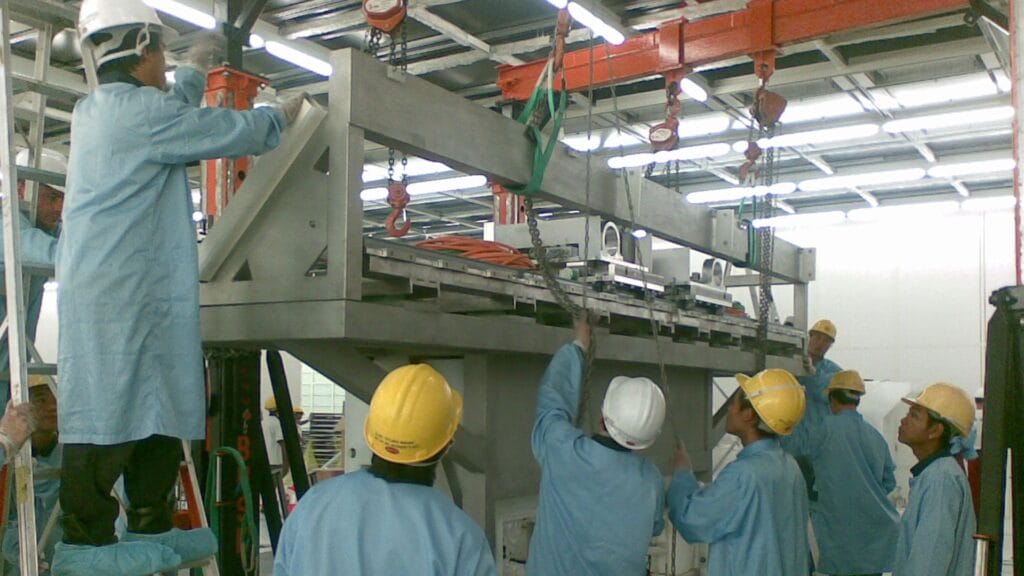
- Rail installation and alignment. The overhead rail sections were installed and aligned to the tolerances the AMHS supplier's system requirements. Rail alignment determines the smooth operations of the wafer transportation, reducing any vibration along its travel path of the carriers — deviation from specification affects the system's ability to navigate the fab correctly.
- Support structure installation. The rail support structures were installed and secured according to the structural requirements of the new system.
- Levelling. Rail sections were levelled across the full span of the installation. Levelling accuracy at this stage is a prerequisite for the AMHS supplier's commissioning process.
- Load port connections. The connections between the overhead rail system and the load ports at each tool position were installed and confirmed to the required clearances.
- Coordination with the AMHS supplier's engineers. B H S installation teams worked in direct coordination with the AMHS supplier's engineers throughout. The Installation scope was B H S's responsibility. The commissioning and system qualification were the AMHS supplier's.
Execution
The decommissioning and installation were executed in phases, coordinated with the fab’s operational schedule. Each phase was planned to minimise disruption to the production environment while maintaining the momentum of the installation programme.
Results and Impact
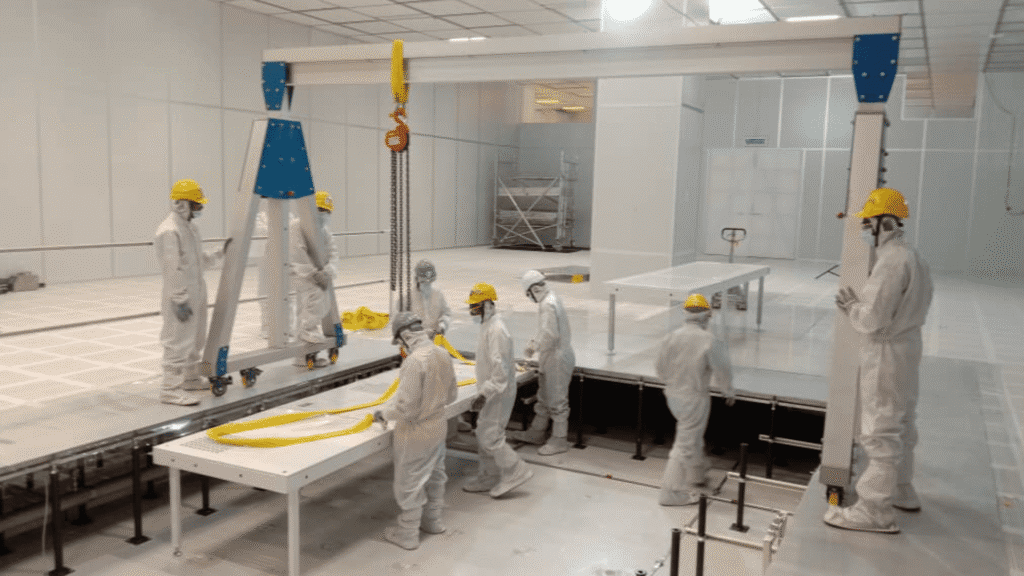
- Existing system decommissioned without disruption to the cleanroom environment. The overhead rail infrastructure was removed in the planned sequence, with no contamination events and no damage to the production tools or cleanroom infrastructure below.
- New AMHS system installed to specification. Rail alignment, levelling, and load port connections were completed to the tolerances the AMHS supplier's commissioning process required. The system was handed over ready for the AMHS supplier's engineers to begin qualification.
- Single installation partner for the full scope. The AMHS supplier had one party responsible for both the decommissioning of the old system and the installation of the new one.
Why B H S Stands Out
AMHS suppliers win the contract from the fab, then turn to BHS to deliver the installation. The mechanical scope demands a specialist capability that suppliers simply do not carry in-house: working inside a live cleanroom, handling overhead rail infrastructure, and coordinating seamlessly with the fab’s facilities team.
That arrangement holds whichever supplier is awarded the contract. The supplier brings the system. BHS installs it.
Decommissioning sets B H S further apart. Many companies can install a new system, but very few have the experience and protocols to dismantle an existing overhead rail system inside a live cleanroom without introducing the contamination and vibration risks that poorly managed decommissioning creates. It is this depth of experience that makes BHS the installation partner of choice, and it is why suppliers return to B H S project after project.

Broader Applications
- AMHS suppliers commission B H S as their installation partner for overhead rail systems, stockers, and associated AMHS infrastructure at customer fabs across Asia and beyond.
- Fabrication facilities managing AMHS upgrades commission B H S directly to manage the transition — decommissioning the existing system and installing the replacement.
- New fab build-outs requiring AMHS infrastructure commission B H S alongside the AMHS supplier to execute the physical installation as the facility is completed.
Conclusion
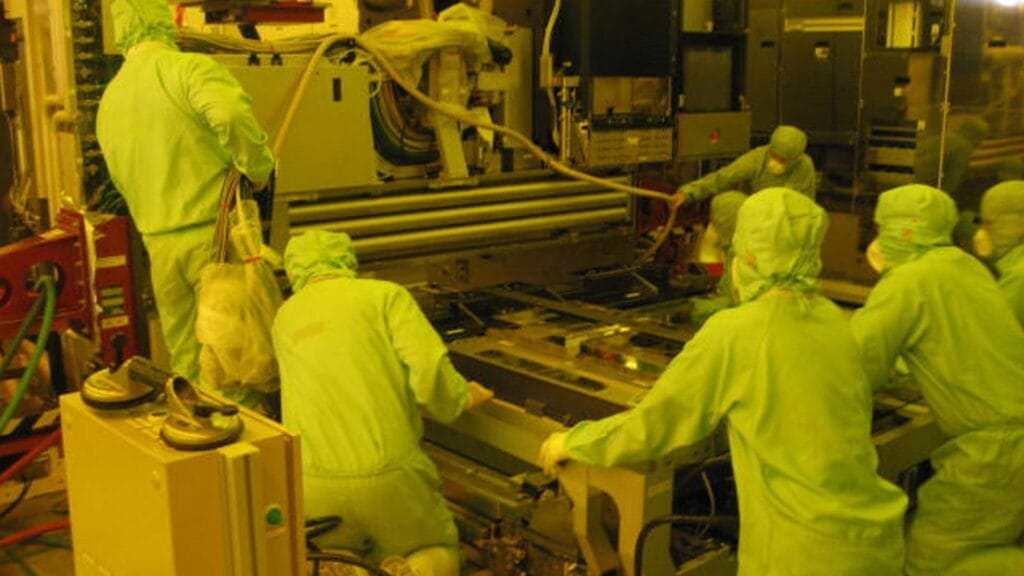
An AMHS overhead rail system is not general construction. It is precision infrastructure installed inside a semiconductor cleanroom, above active production tools, to tolerances that determine whether the system can be commissioned and used.
B H S managed the full scope of this transition — decommissioning the existing overhead rail system and installing the replacement — as a single coordinated operation, with one point of accountability throughout.
Contact us to discuss how B H S can support your next AMHS installation or upgrade project.
Sources and Further Reading
Industry standards and regulatory references relevant to this case study:
- Singapore Economic Development Board — Semiconductor Industry — https://www.edb.gov.sg/en/our-industries/semiconductors.html
- SEMI Standards for Semiconductor Equipment and Materials — https://www.semi.org/en/standards
- Singapore Semiconductor Industry Association (SSIA) — https://ssia.org.sg/


