

Sensitive Equipment Rigging: Semiconductor Tool Decommissioning and Export Packing
Categories
Introduction
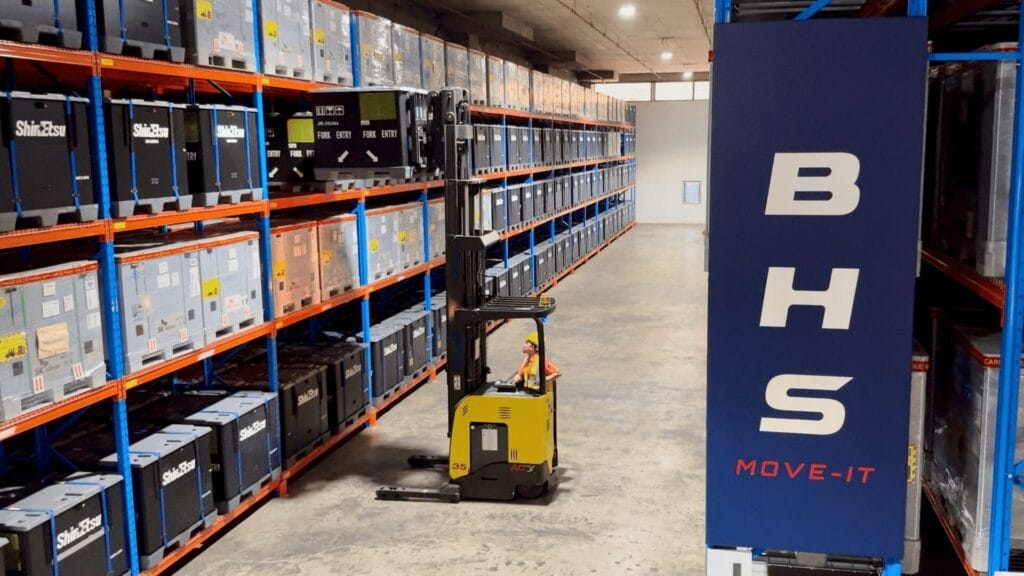
When a semiconductor fabrication facility in Singapore retired a production line, the customer needed more than a removal crew. The tools had to be rigged out of a live cleanroom without disturbing the production environment around them, transported to a controlled facility, packed for sea freight export, and held securely until the freight forwarder was ready to collect. B H S was commissioned directly by the fab to manage the full scope — sensitive equipment rigging, cleanroom extraction, export packing, and secure storage — from start to handover.
Singapore’s fabrication facilities operate on more mature process nodes than newer fabs elsewhere in the region. As the industry advances, older production lines here are among the first to be retired — making decommissioning an increasingly regular part of the equipment lifecycle. For semiconductor manufacturers managing that transition, the question is not whether tools will need to come out, but how to do it without disrupting what remains in production.
The Customer’s Challenge
Retiring a production line inside a live fab is a controlled operation, not a clearance job. The customer faced several constraints that required careful planning before any physical work could begin.
- Protecting the live cleanroom environment. The tools earmarked for decommissioning sat within an active fab. Adjacent tools on the production floor remained in operation throughout. Any extraction that introduced contamination, vibration, or physical disruption to the surrounding environment would have consequences beyond the tools being removed.
- Rigging sequence and access planning. The tools could not be rigged out in the most convenient order. Each lift had to be planned around the physical layout of the cleanroom, the position of active tools, and the access routes available. The wrong sequence would create risk or block subsequent rigging work.
- Export packing to sea freight standard. Once out of the cleanroom, each tool needed to be packed to a standard suitable for sea freight export. That means a minimum of three bespoke layers, with the outermost being a custom-built wooden crate sized to the specific tool. The packing has to be built from scratch for each tool — there is no off-the-shelf solution for semiconductor equipment of this kind.
- Coordinating the handover to the freight forwarder. The customer's freight forwarder had its own collection schedule. The tools needed to be stored securely at the B H S warehouse, documentation prepared, and the batch ready for collection at the agreed time.
The B H S Solution
Pre-Rigging Planning
Before any tool was touched, B H S reviewed the cleanroom layout with the customer’s facility team. The rigging sequence was mapped out to protect the surrounding environment and allow each extraction to proceed without interfering with the next. Access routes, rigging positions, lift plans, and equipment requirements were confirmed before work began. This planning stage is not optional for work of this nature. A live cleanroom has no tolerance for improvisation.
Cleanroom Rigging and Extraction
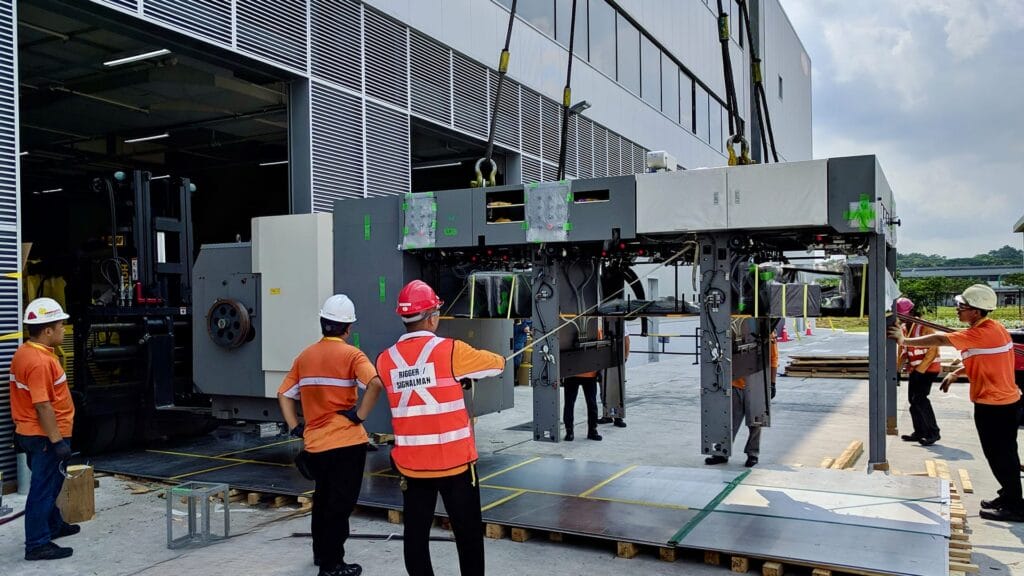
B H S crews followed cleanroom protocols throughout. Each tool was disconnected, rigged out, and moved to the staging area using equipment suited to the weight, dimensions, and sensitivity of the tools involved. Handling procedures were applied consistently across the batch. The extraction was executed as a planned sequence. Progress was tracked against the rigging schedule, and the team coordinated with the customer’s facility personnel at each stage to confirm the environment remained undisturbed.
Transport to the B H S Warehouse
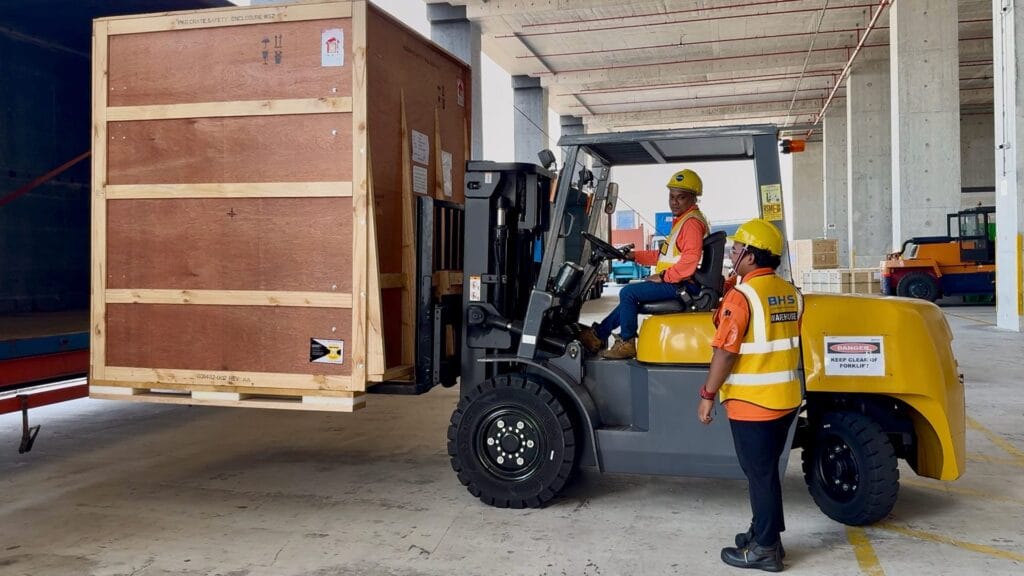
Following extraction, the tools were transported to the B H S warehouse by B H S trucks. Each tool was received and prepared for the next phase of handling.
Export Packing at the B H S Warehouse
The tools arrive at the warehouse with temporary coverings from the cleanroom extraction. To export semiconductor tools by sea freight, temporary coverings are not sufficient. Each tool requires a minimum of three layers of bespoke packing, with the outermost being a custom-built wooden crate.
B H S Pack-IT supplies and builds all three layers. The packing is bespoke because semiconductor tools vary in size, weight, and sensitivity — there is no standard crate that fits all of them. Each wooden crate is built to the dimensions and requirements of the specific tool it protects, designed to withstand the conditions of a sea freight journey: vibration, stacking loads, humidity, and handling at ports.
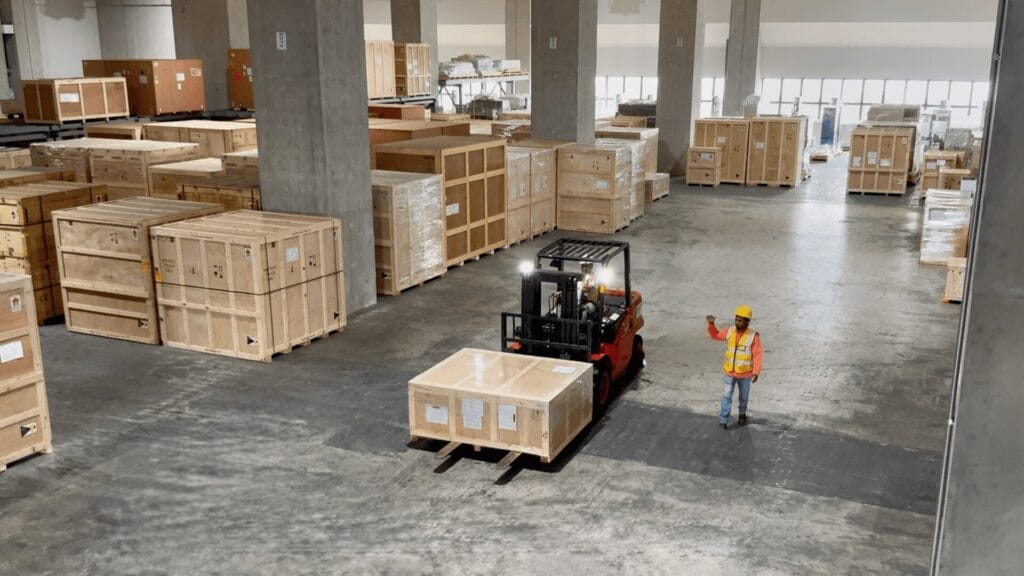
Packing was completed ahead of the collection window, giving the customer and their freight forwarder a confirmed ready date.
Secure Storage and Handover
The repacked tools were held at the B H S warehouse until the freight forwarder was ready to collect. Storage conditions were maintained throughout the holding period. Documentation was prepared and available at the point of collection, supporting a clean handover with no gaps in the chain of custody.
Results and Impact
- Full batch rigged out without incident. All tools were extracted from the cleanroom in the planned sequence. No damage occurred to the tools being removed, and the adjacent production environment remained undisturbed throughout.
- Bespoke export packing completed on schedule. All three layers were built and the custom wooden crates completed ahead of the freight forwarder's collection window.
- Single point of accountability from extraction to handover. From the point of cleanroom rigging to the freight forwarder's collection, the tools remained under B H S control. The customer had one party responsible for the full scope.
- Clean documentation at handover. The freight forwarder collected a complete, documented batch, reducing the risk of delays at the point of export.
Why B H S Stands Out
Decommissioning work is often treated as lower priority than a new installation. The tools are leaving, not arriving. But the sensitive equipment rigging discipline required is the same — and in some respects greater, because the live environment around the tools must be protected throughout an extraction.
B H S applies the same planning rigour to a rigging-out as to a move-in. Semiconductor equipment rigging requires the same cleanroom sequencing, lift plans, handling protocols, and documentation whether tools are being installed or removed. None of these are reduced because the tools are end-of-life.
The combination of Move-IT and Pack-IT under a single scope also removes a coordination gap that can otherwise introduce risk. The team responsible for the cleanroom rigging is aligned with the team that builds the export packing. B H S supplies all three layers of bespoke packing, including the custom-built wooden crate — nothing is left to a third party to complete before the freight forwarder arrives.
For a fab managing a production line retirement, that continuity across the full scope matters.
Broader Applications
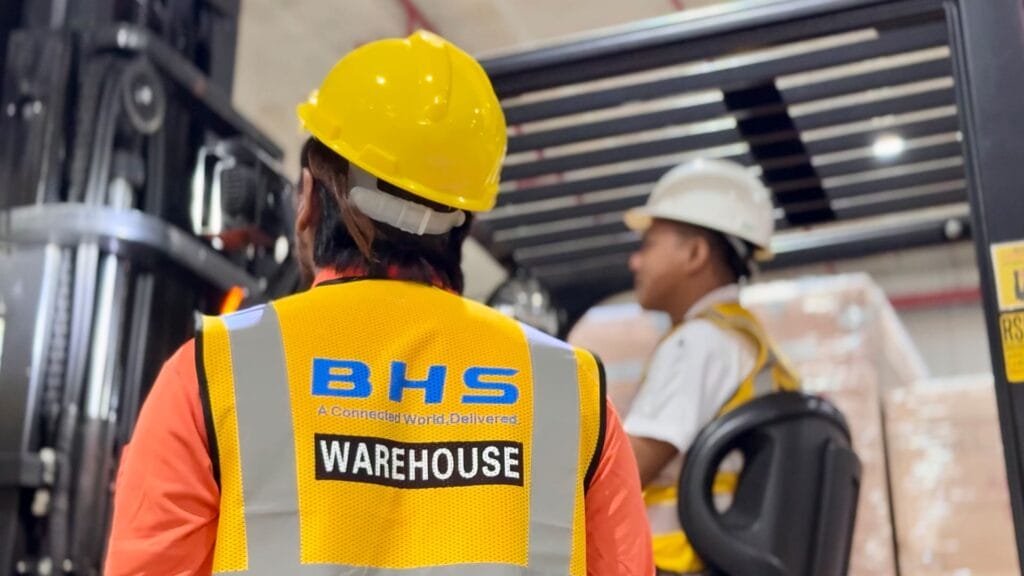
The work described in this case study reflects the three types of customers who commission B H S directly for semiconductor equipment rigging and handling.
- Fabrication facilities commission B H S for tool move-ins, internal relocations, production line retirements, and new fab build-outs. B H S operates within cleanroom environments and coordinates directly with facility teams throughout.
- Semiconductor equipment manufacturers and OEMs commission B H S to support the installation, repositioning, and decommissioning of the tools they supply. For an OEM, having a trusted rigging partner at the receiving end protects the integrity of the equipment and reduces the risk of installation damage.
- Freight forwarders commission B H S because their remit ends at the loading dock. Moving semiconductor tools out of operational crates, rigging them into a cleanroom, or extracting them from a live fab requires a different capability — one that freight forwarders do not carry internally. B H S fills that gap as a direct specialist partner on the physical handling side.
In each case, the requirement is the same: a partner with the technical capability and operational discipline to handle high-value semiconductor equipment correctly, in environments where the cost of an error is high.
Conclusion
Retiring a semiconductor production line requires the same standard of planning and execution as building one. B H S managed the full scope of this project — from cleanroom rigging and extraction to bespoke export packing and secure storage — as a single coordinated operation, with one point of accountability throughout.
For fabrication facilities, equipment manufacturers, and freight forwarders managing semiconductor tools at the end of their production life, B H S provides the operational control needed to close that chapter without risk to the equipment or the environment it leaves behind.
Contact us to discuss how B H S can support your next decommissioning or equipment export project.


